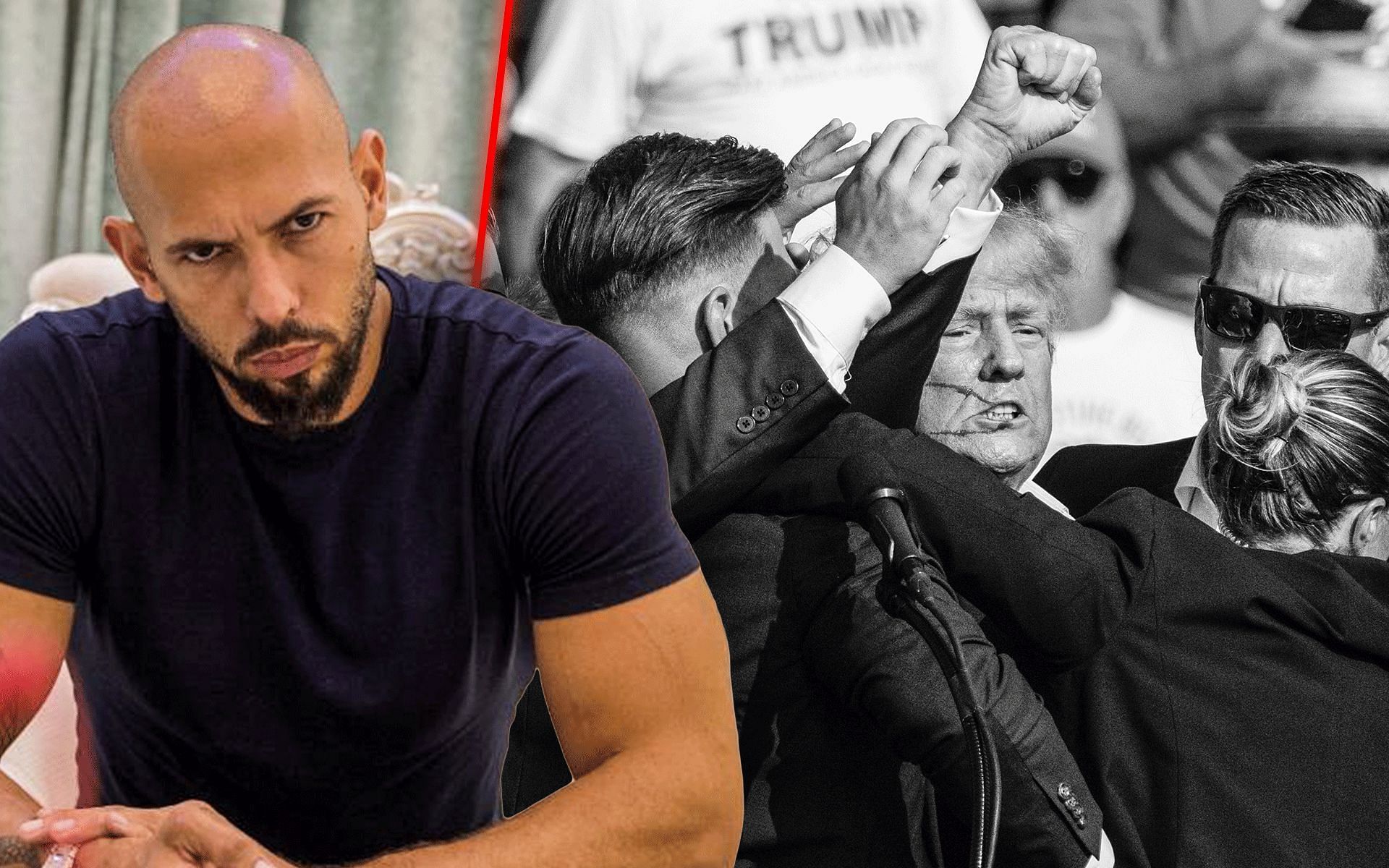
Unpacking the Toxic Legacy of Trump and Tate: A Journey into the Heart of Radicalization
The world of politics has always been complex, with ideologies and philosophies often overlapping and influencing one another. However, in recent years, a concerning trend has emerged: the growing radicalization of the Republican Party in the United States. This phenomenon is exemplified in the figures of Donald Trump and Andrew Tate, two prominent figures who have garnered significant attention for their polarizing views. This article will delve into the flawed philosophy of Trump and explore how Tate's extremism reflects the broader Republican Party's growing radicalization.
The radicalization of the Republican Party has been a topic of discussion among scholars and pundits for several years. At its core, it is a complex issue that cannot be attributed to a single factor. However, several key events and figures have contributed to this shift. One of the most significant events was the 2016 presidential election, which saw Trump's surprise victory. This win marked a turning point for the Republican Party, as it demonstrated that a candidate who championed divisive and populist rhetoric could resonate with a large segment of the electorate.
Understanding Trump's Philosophy
Donald Trump's presidency was marked by controversy and polarizing policies. At the heart of his philosophy was a misguided understanding of American exceptionalism and a desire to create a "meritocratic" society. Trump's economic policies, such as the tax cuts and deregulation, were designed to favor the wealthy and large corporations, while also stoking trade wars and imposing tariffs on countries that Trump perceived as unfair.
One of the most contentious aspects of Trump's presidency was his "America First" approach, which emphasized a shift away from international alliances and toward a more isolationist foreign policy. This stance was rooted in a simplistic view of geopolitics, which Trump claimed was essential to protecting American interests.
The Consequences of Trump's Policies
Trump's policies had far-reaching consequences, both domestically and internationally. Economically, his tax cuts and deregulation policies led to a significant increase in national debt and income inequality. Internationally, his withdrawal from the Trans-Pacific Partnership and his tariffs on Chinese goods led to a decline in global trade and an escalation of tensions between the US and China.
The Role of Identity Politics
Trump's presidency was also marked by a rise in identity politics, which emphasized the importance of cultural and demographic groups in shaping American politics. This shift was reflected in Trump's use of coded language and divisive rhetoric, which was designed to appeal to specific groups and amplify existing tensions.
The Impact on Minority Groups
Trump's policies and rhetoric had a disproportionate impact on minority groups, including African Americans, Hispanics, and Muslims. His "travel ban" targeting predominantly Muslim countries was widely criticized as discriminatory, and his comments on crime and immigration perpetuated negative stereotypes about these groups.
The Rise of Extremism in the GOP
The Republican Party's growing radicalization is not unique to Trump's presidency. Several factors have contributed to this trend, including the rise of the Tea Party movement and the increasing influence of far-right ideologies.
Andrew Tate's Extremism
Andrew Tate is a British-American social media personality and businessman who has gained significant attention for his far-right views and self-proclaimed status as a champion of masculinity. Tate's online presence is marked by a combination of misogyny, racism, and xenophobia, which has led to him being banned from several social media platforms.
Tate's Views on Women and Men
Tate's views on women and men are deeply rooted in patriarchal ideology. He has repeatedly expressed support for the notion that men are superior to women and that women are responsible for perpetuating patriarchy. Tate has also advocated for a return to traditional gender roles, which he claims will lead to a more "stable" and "harmonious" society.
The Dangerous Implications of Tate's Views
Tate's views on women and men have serious implications for those who identify as LGBTQ+ or female. His advocacy for traditional gender roles and his support for misogynistic attitudes towards women are deeply concerning and have the potential to lead to further marginalization and oppression.
The GOP's Growing Radicalization
The Republican Party's growing radicalization is a complex issue that cannot be attributed to a single factor. However, several key events and figures have contributed to this shift. One of the most significant events was the 2016 presidential election, which saw Trump's surprise victory.
The Rise of Far-Right Ideologies
The Republican Party's growing radicalization is also reflected in the increasing influence of far-right ideologies. Several groups, including the Tea Party and the Proud Boys, have gained significant attention for their extremist views and violent tactics.
The Consequences of GOP Radicalization
The GOP's growing radicalization has serious consequences for American democracy. The erosion of civil discourse and the proliferation of misinformation have contributed to a polarized political landscape, which has the potential to undermine democratic institutions.
Conclusion
The flawed philosophy of Trump and the extremism of Andrew Tate reflect the broader Republican Party's growing radicalization. This trend has serious implications for American democracy, including the erosion of civil discourse and the proliferation of misinformation. As the Republican Party continues to shift further to the right, it is essential to understand the underlying factors driving this trend and to consider the consequences of its growing radicalization.
Further Reading
- The Radical Right in America by Lance Selfa
- The Rise of the Right by David Roediger
- The Fate of the Republican Party by Peter B. Moseley
In conclusion, the Republican Party's growing radicalization is a complex issue that requires careful consideration. By understanding the flawed philosophy of Trump and the extremism of Andrew Tate, we can gain insight into the broader trends shaping American politics.
Recent Post
Unlocking The Secrets Of Menopause: Expert Insights On Navigating Life After 40 With Paolo Tantoco
Tensions Rise As Trump Officials Defend Tariffs Amid Market Volatility And Warnings For Savers And Retirees
Rosie O'Donnell Teases Trump Move, Posts Disruptive Selfie From Abroad
Wings For The Win: Capitals Edge Ducks 7-4 In Thrilling Matchup
Ducks Fall Short: Key Takeaways From Thrilling 7-4 Loss To Capitals
Article Recommendations
- Hisashi Ouchi: The Horrific Story Of The Man Who Endured 83 Days Of Radiation Exposure
- Billie Eilish: A Journey Of Music, Rebellion, And Authenticity
- Unveiling Sabrina Carpenter's Height: Inside The Star's Enchanting Stature