The Sleeping Giant: Is the San Andreas Fault About to Awaken?
As the world grapples with the threat of natural disasters, one fault line has long been a source of concern for geologists and policymakers alike: the San Andreas Fault. Stretching over 800 miles through California, this massive transform fault has been responsible for some of the most devastating earthquakes in U.S. history, including the 1906 San Francisco earthquake and the 1989 Loma Prieta earthquake. With growing fears that the San Andreas Fault is overdue for a major quake, the question on everyone's mind is: is it about to awaken?
The San Andreas Fault has been considered a high-risk zone for earthquakes for decades, with many experts warning that a major quake is imminent. However, despite the growing concern, the fault's activity has been relatively quiet in recent years. The most recent significant earthquake in the region was the 2014 Ridgecrest earthquake, a 6.0 magnitude quake that was felt across California and Nevada. While this earthquake was significant, it was a relatively minor event compared to the massive quakes that the San Andreas Fault is capable of producing.
The Science Behind the San Andreas Fault
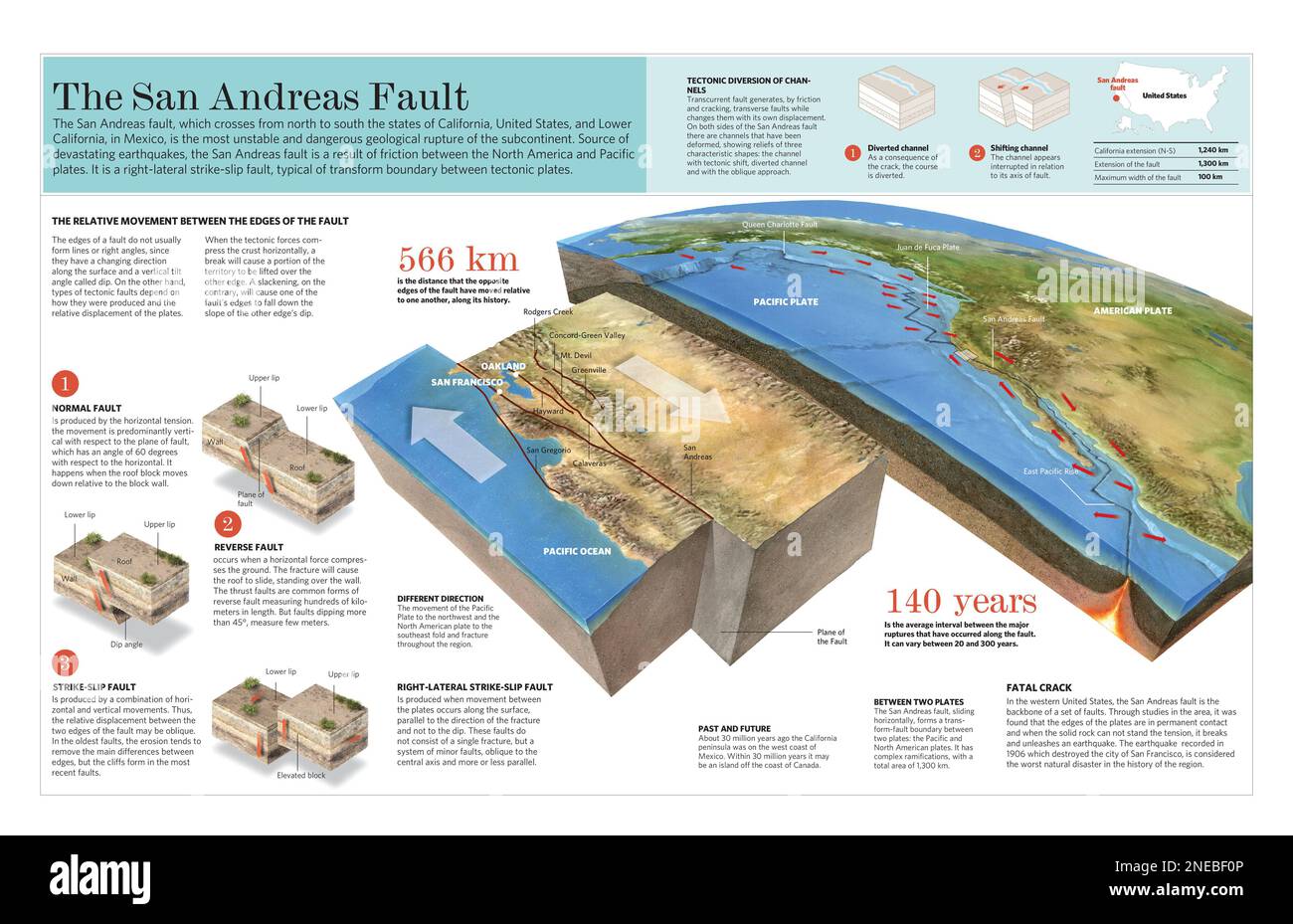
So, what exactly is the San Andreas Fault, and why is it considered a high-risk zone for earthquakes? The San Andreas Fault is a transform fault, meaning that it is a zone of plate boundary where two tectonic plates are moving past each other. The Pacific Plate is moving northwestward at a rate of about 3-4 centimeters per year, while the North American Plate is moving southeastward at a rate of about 2-3 centimeters per year. This movement is causing the Earth's crust to build up stress, which is eventually released in the form of an earthquake.
The San Andreas Fault is unique in that it is a major transform fault that has been active for millions of years. It has produced some of the most significant earthquakes in U.S. history, including the 1906 San Francisco earthquake and the 1989 Loma Prieta earthquake. These quakes were both devastating, with the 1906 earthquake killing over 3,000 people and causing widespread destruction, and the 1989 earthquake killing 63 people and causing an estimated $10 billion in damages.
The Risk of a Major Quake
So, what triggers a major earthquake on the San Andreas Fault? The answer is complex, but it's ultimately a matter of building up enough stress in the Earth's crust. The San Andreas Fault is a zone of plate boundary, and the movement of the two tectonic plates is constantly building up stress in the Earth's crust. This stress is eventually released in the form of an earthquake.
There are several factors that contribute to the risk of a major quake on the San Andreas Fault. These include:
• The amount of stress building up in the Earth's crust: As the Pacific Plate moves northwestward and the North American Plate moves southeastward, the Earth's crust is constantly building up stress. This stress is eventually released in the form of an earthquake.
• The age of the fault: The San Andreas Fault is an ancient fault that has been active for millions of years. As the Earth's crust is continually pushed and pulled, the fault is constantly moving, which can cause stress to build up.
• The location of the fault: The San Andreas Fault runs through several major cities, including Los Angeles, San Francisco, and San Diego. A major quake on the fault could cause widespread destruction and loss of life.
The Effects of a Major Quake on the San Andreas Fault
A major quake on the San Andreas Fault could have devastating effects on the region. Some of the possible effects include:
• Widespread destruction: A major quake on the San Andreas Fault could cause widespread destruction, including damage to buildings, roads, and infrastructure. The earthquake could also trigger landslides and wildfires, which could have devastating effects on the environment.
• Loss of life: A major quake on the San Andreas Fault could result in significant loss of life, particularly in areas where buildings are not designed to withstand earthquakes.
• Economic disruption: A major quake on the San Andreas Fault could have significant economic implications, including damage to infrastructure, loss of business, and disruption to supply chains.
Preparing for a Major Quake
While a major quake on the San Andreas Fault is a significant concern, there are steps that can be taken to prepare for and mitigate the effects of such an event. Some of the possible steps include:
• Building earthquake-resistant buildings: Buildings can be designed and constructed to withstand earthquakes, reducing the risk of damage and loss of life.
• Creating emergency response plans: Communities can create emergency response plans that outline the steps to be taken in the event of an earthquake, including evacuation procedures and first aid.
• Conducting regular earthquake drills: Conducting regular earthquake drills can help communities prepare for the event and reduce the risk of injury or loss of life.
The Role of Geologists in Predicting Earthquakes
Geologists play a critical role in predicting earthquakes, including those on the San Andreas Fault. While it's impossible to predict with certainty when and where an earthquake will occur, geologists can identify areas of increased seismic activity and provide early warnings of an impending quake.
Some of the ways that geologists predict earthquakes include:
• Monitoring seismic activity: Geologists monitor seismic activity in the region, including the movement of tectonic plates and the release of stress in the Earth's crust.
• Analyzing fault patterns: Geologists analyze fault patterns to identify areas of increased seismic activity and potential for earthquake activity.
• Conducting laboratory tests: Geologists conduct laboratory tests to analyze the properties of rocks and fault zones, which can help identify potential areas of earthquake activity.
The Limitations of Earthquake Prediction
While geologists can identify areas of increased
Recent Post
Unlocking The Secrets Of Menopause: Expert Insights On Navigating Life After 40 With Paolo Tantoco
Tensions Rise As Trump Officials Defend Tariffs Amid Market Volatility And Warnings For Savers And Retirees
Rosie O'Donnell Teases Trump Move, Posts Disruptive Selfie From Abroad
Wings For The Win: Capitals Edge Ducks 7-4 In Thrilling Matchup
Ducks Fall Short: Key Takeaways From Thrilling 7-4 Loss To Capitals
Article Recommendations
- Discover The Rising Star Of C-Drama: Zhao Lusi's Charismatic Performances
- Unveiling The Extraordinary Life And Legacy Of Melissa Ann Piavis
- Discover Zoe Chip: Unleash The Power Of AI-Powered Fitness Tracking
:max_bytes(150000):strip_icc()/aerial-view-direction-of-view-is-from-the-northwest-to-the-southeast-of-san-andreas-fault-near-taft-california-usa-177242210-57ebfd553df78c690f375ae8.jpg)