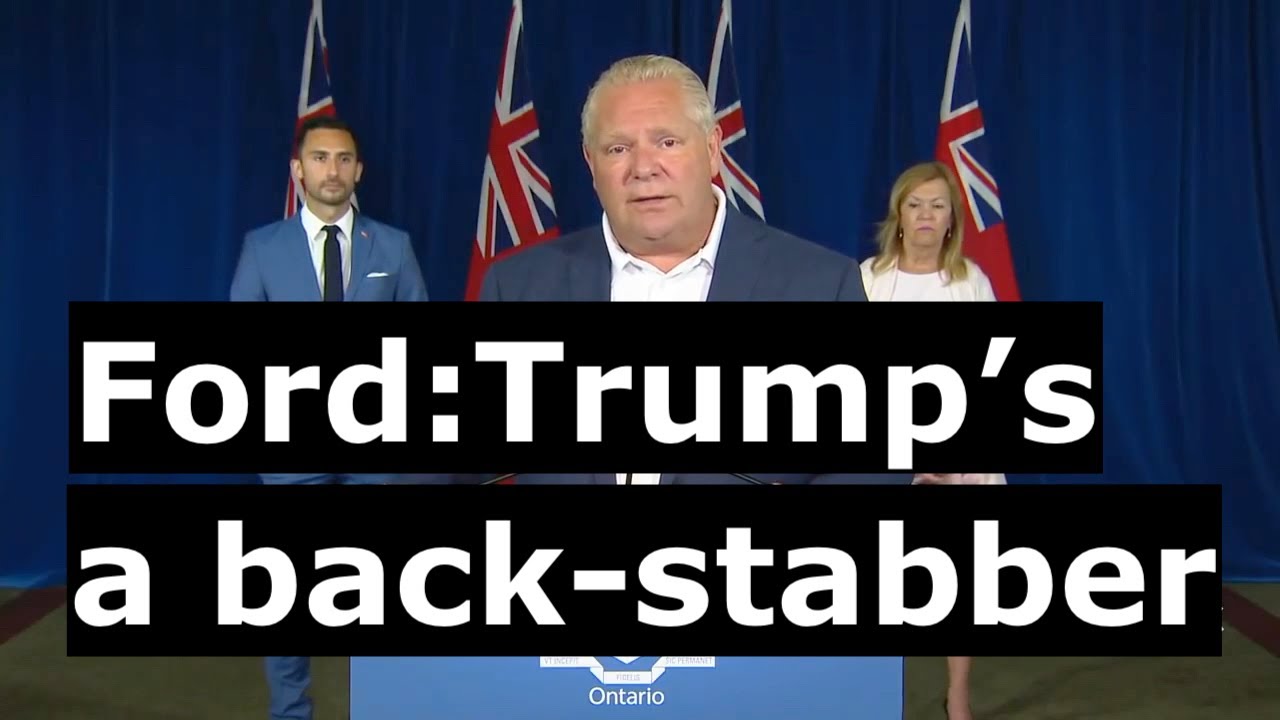
Ontario Premier Blames Trump Tariffs For "Mass Chaos" As Economy Grapples With Trade Tensions
The province of Ontario, Canada's largest economy, is feeling the effects of the ongoing trade tensions between the United States and its trading partners. Ontario Premier Doug Ford has come under fire for his criticism of US President Donald Trump's tariffs, which he claims are causing "mass chaos" in the province's economy.
The economic impact of the tariffs, which were imposed by the US in response to Canada's imposed tariffs on US steel and aluminum, has been widely reported. The tariffs have led to higher prices for consumers, reduced sales for businesses, and decreased investment in the province. Ontario is heavily reliant on trade with the US, and the tariffs have disproportionately affected the province's agricultural and manufacturing sectors.
Ford's criticism of Trump's tariffs is not new, but his comments in recent weeks have sparked renewed attention to the issue. In a press conference, Ford accused Trump of being "reckless" and "disrespectful" for imposing tariffs on Ontario's industries. He also pointed out that the tariffs have damaged the province's reputation and hurt its economy.
The economic impact of the tariffs has been felt throughout Ontario. The province's agricultural sector, which is a major employer and producer of food, has been particularly hard hit. The tariffs have led to higher prices for farmers, reduced sales, and decreased investment in the sector. This has resulted in job losses and decreased revenue for farmers, many of whom are struggling to make ends meet.
Impact on Ontario's Manufacturing Sector
The tariffs have also had a significant impact on Ontario's manufacturing sector. The province is home to many major manufacturers, including automakers, aerospace companies, and food processing firms. The tariffs have led to higher production costs, reduced competitiveness, and decreased sales for these firms.
Some of the key industries that have been affected by the tariffs include:
• Automotive manufacturing: The tariffs have led to higher costs for car manufacturers, which have been passed on to consumers in the form of higher prices.
• Aerospace manufacturing: The tariffs have reduced access to raw materials and increased costs for aerospace companies, making it more difficult for them to compete with US-based firms.
• Food processing: The tariffs have led to higher costs for food processors, which have been passed on to consumers in the form of higher prices.
Impact on Ontario's Economy
The economic impact of the tariffs has been felt throughout Ontario's economy. The province's GDP has been affected, and many businesses have seen reduced sales and investment.
Some of the key statistics that illustrate the economic impact of the tariffs include:
• Reduced GDP growth: The tariffs have led to reduced economic growth in Ontario, with the province's GDP growth rate slowing in recent quarters.
• Reduced business investment: The tariffs have led to reduced investment in Ontario, with many businesses choosing to invest in the US instead.
• Job losses: The tariffs have led to job losses in Ontario, particularly in the agricultural and manufacturing sectors.
How the Federal Government Is Responding
The federal government has been criticized for its response to the tariffs, with many arguing that it has not done enough to protect Ontario's economy. In recent weeks, the government has taken steps to address the issue, including:
• Implementing a rebate program for farmers: The government has implemented a rebate program to help farmers offset the costs of the tariffs.
• Providing support for manufacturers: The government has provided support for manufacturers, including tax credits and other incentives to help them compete with US-based firms.
Conclusion
The tariffs imposed by the US on Ontario's industries have had a significant impact on the province's economy. The economic impact of the tariffs has been felt throughout Ontario, from the agricultural sector to the manufacturing sector. The federal government's response to the tariffs has been criticized, and many are calling for further action to protect Ontario's economy. As the trade tensions continue to escalate, it remains to be seen how Ontario's economy will be affected.
What Can Be Done
There are several steps that can be taken to address the economic impact of the tariffs:
• Implementing a comprehensive trade agreement: A comprehensive trade agreement between the US, Canada, and other countries could help to reduce tariffs and increase trade.
• Providing support for farmers: The government could provide additional support for farmers, including subsidies and other forms of assistance.
• Increasing investment in Ontario: The government could increase investment in Ontario, including infrastructure and other projects, to help the province compete with the US.
Related Articles
- The Impact of Trade Tensions on the Canadian Economy
- The US-China Trade War: How It's Affecting the Global Economy
- Ontario's Agricultural Sector: How the Tariffs Are Affecting Farmers
What Are Your Thoughts?
The tariffs imposed by the US on Ontario's industries have had a significant impact on the province's economy. Share your thoughts on the issue in the comments below.
Underline
This article is for informational purposes only and should not be considered as investment advice.
Recent Post
Unlocking The Secrets Of Menopause: Expert Insights On Navigating Life After 40 With Paolo Tantoco
Tensions Rise As Trump Officials Defend Tariffs Amid Market Volatility And Warnings For Savers And Retirees
Rosie O'Donnell Teases Trump Move, Posts Disruptive Selfie From Abroad
Wings For The Win: Capitals Edge Ducks 7-4 In Thrilling Matchup
Ducks Fall Short: Key Takeaways From Thrilling 7-4 Loss To Capitals
Article Recommendations
- Jelly Bean-tastic Treats: Dive Into A World Of Flavored Bliss
- Rising Star Talia Ryder: Breaking Barriers And Captivating Audiences
- NASCAR Legend Dale Jarrett: A Retrospective Of His Unforgettable Career


