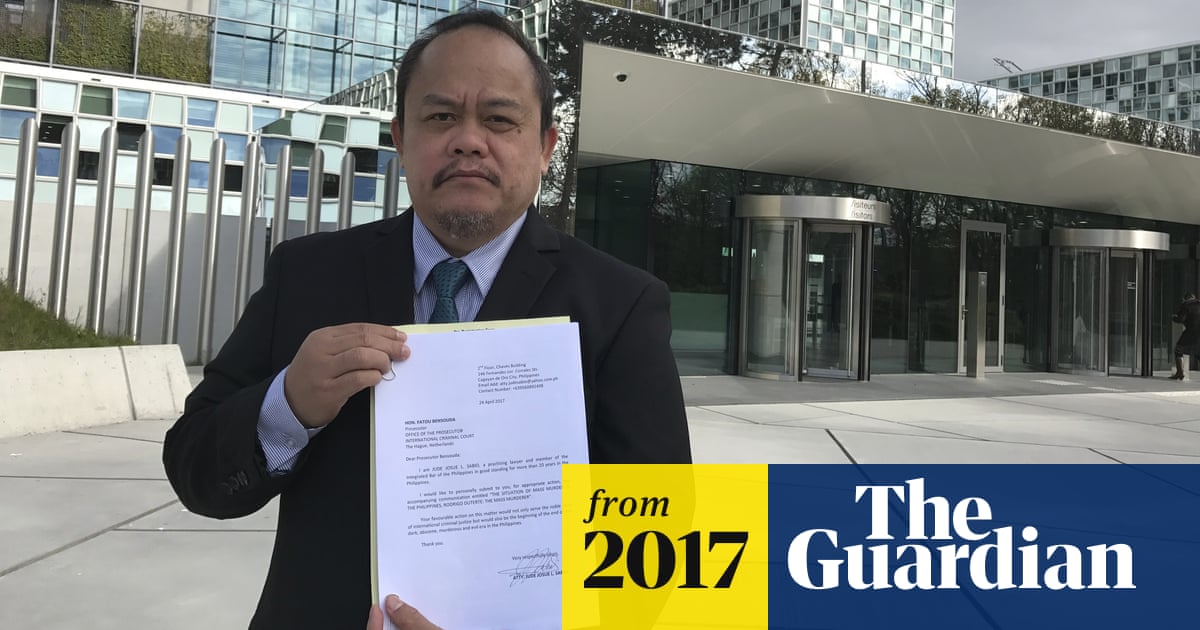
ICC Cracks Down on Authoritarian Leaders: Duterte's ICC Arrest Warrant Sets Precedent for International Accountability
The International Criminal Court (ICC) has handed a significant blow to authoritarian leaders around the world, issuing an arrest warrant for former Philippine President Rodrigo Duterte over alleged mass killings. This development marks a major milestone in the ICC's efforts to hold powerful individuals accountable for human rights abuses and crimes against humanity.
The ICC's decision is a testament to the court's commitment to upholding the rule of law and protecting human rights, even in the face of intense pressure from powerful governments. By targeting Duterte, the ICC is sending a clear message that no one is above the law, regardless of their position or influence.
Duterte's alleged war on drugs, which resulted in the deaths of thousands of suspected traffickers and users, has been widely condemned by human rights groups and independent investigators. The ICC's investigation into Duterte's role in these killings is a long-overdue step towards bringing justice to the victims and their families.
The ICC's arrest warrant is based on evidence of Duterte's involvement in the extrajudicial killings of at least 17,000 people, mostly suspected users of illicit drugs, between 2016 and 2019. The court has found that Duterte's campaign was characterized by "widespread and systematic attacks" on the rights of suspected traffickers, including torture, enforced disappearances, and extrajudicial killings.
Historical Context: The ICC's Jurisdiction Over Duterte
The ICC's jurisdiction over Duterte is based on its Jurisdictional Clause, which allows the court to investigate and prosecute individuals for crimes committed in the territory of a state party, regardless of where the crimes were committed. The Philippines is one of the ICC's founding member states, and the court has jurisdiction over crimes committed on its territory.
However, it's worth noting that the ICC's jurisdiction over Duterte is not without controversy. The Philippines has long refused to cooperate with the ICC, and Duterte has repeatedly attacked the court and its investigations. In 2018, the Philippines Senate voted to withdraw from the ICC, citing concerns about the court's jurisdiction and the potential for "political persecution" of Duterte.
Despite these challenges, the ICC has been able to gather evidence against Duterte through a variety of means, including interviews with witnesses, forensic analysis of crime scenes, and review of government documents. The court has also received support from a number of countries, including the Netherlands and Belgium, which have submitted evidence to the ICC's investigation.
The Impact of the ICC Arrest Warrant on Duterte and the Philippines
The ICC's arrest warrant for Duterte has significant implications for both the former president and the Philippines. On one hand, the warrant could potentially lead to Duterte's prosecution and conviction for crimes against humanity. This would be a major victory for human rights activists and victims of Duterte's regime.
On the other hand, the warrant also carries significant risks for Duterte and the Philippines. The country's government has long been wary of the ICC, and the arrest warrant could exacerbate tensions between the two. Duterte has threatened to resign if the ICC intervenes in the country's affairs, and there are concerns that the government could respond to the warrant with violence.
The Global Implications of the ICC Arrest Warrant
The ICC's arrest warrant for Duterte has far-reaching implications for human rights activists and advocates around the world. It sets a powerful precedent for the court's ability to hold powerful individuals accountable for crimes against humanity, regardless of their position or influence.
The warrant also highlights the ongoing struggles of human rights defenders in the Philippines, who have faced significant persecution and intimidation under Duterte's regime. The ICC's decision to pursue an investigation into Duterte's role in the killings is a testament to the court's commitment to protecting human rights and upholding the rule of law.
In addition to its implications for human rights activists, the ICC arrest warrant also carries significant implications for the global war on drugs. The court's investigation into Duterte's campaign has shed new light on the devastating impact of the war on drugs, which has resulted in the deaths of thousands of people in the Philippines and elsewhere.
The Role of the US and Other Countries in the ICC Investigation
The ICC's investigation into Duterte's role in the killings has received significant support from a number of countries, including the United States. The US has provided the ICC with forensic analysis of crime scenes and has submitted evidence to the court's investigation.
However, the US has also faced criticism for its close ties to the Philippines and its reluctance to support the ICC's investigation. The US has long been wary of the ICC, and has repeatedly expressed concerns about the court's jurisdiction and the potential for "political persecution" of Duterte.
Other countries, including the Netherlands and Belgium, have also provided significant support to the ICC's investigation. These countries have submitted evidence to the court and have expressed their support for the ICC's efforts to hold powerful individuals accountable for crimes against humanity.
The Future of the ICC Investigation
The ICC's investigation into Duterte's role in the killings is ongoing, and the court has announced plans to issue a final decision on the arrest warrant within the next few months. The outcome of the investigation is uncertain, and there are significant risks involved for both Duterte and the Philippines.
However, the ICC's decision to pursue an investigation into Duterte's role in the killings is a testament to the court's commitment to protecting human rights and upholding the rule of law. The court's efforts to hold powerful individuals accountable for crimes against humanity are a crucial step towards promoting justice and accountability around the world.
The Victims and Their Families
The victims of Duterte's campaign and their families have been waiting for justice for far too long. The ICC's investigation into the killings has brought new hope to those seeking accountability, and the court's decision to pursue an arrest warrant is a major step towards justice.
The victims and their families deserve nothing but the fullest measure
Recent Post
Unlocking The Secrets Of Menopause: Expert Insights On Navigating Life After 40 With Paolo Tantoco
Tensions Rise As Trump Officials Defend Tariffs Amid Market Volatility And Warnings For Savers And Retirees
Rosie O'Donnell Teases Trump Move, Posts Disruptive Selfie From Abroad
Wings For The Win: Capitals Edge Ducks 7-4 In Thrilling Matchup
Ducks Fall Short: Key Takeaways From Thrilling 7-4 Loss To Capitals
Article Recommendations
- Uday Chopra: Bollywood's Beloved Star And Former Assistant Director
- Abby Phillip's Net Worth: Inside The CNN Anchor's Financial Success
- Brooke Monk: The Viral TikTok Star's Rise To Fame And Unbreakable Spirit