- Early Years (1900s-1920s)
- Development of Modern Airplanes (1920s-1940s)
- Post-War Era (1940s-1960s)
- Commercial Airliners
- General Aviation Aircraft
- Military Aircraft
- Rotorcraft
- Unmanned Aerial Vehicles (UAVs)
- Aerodynamics and Airfoil Shapes
- Structural Components
- Avionics and Electronics
- Propulsion Systems
- Airworthiness Certificates
- Maintenance and Inspections
- Emergency Procedures
- Safety Standards
- Economic Impact
- Environmental Impact
- Social Impact
The Thrilling World of Airplanes: A Comprehensive Guide to Understanding the Science and Technology Behind Flight
Airplanes have been a cornerstone of modern transportation for nearly a century, revolutionizing the way we travel long distances. From the first powered flight by the Wright brothers in 1903 to the sophisticated, high-tech aircraft of today, the science and technology behind airplanes have come a long way. In this article, we will delve into the fascinating world of airplanes, exploring their history, design, and functionality, as well as the impact they have on our daily lives.
The concept of flight has been around for centuries, with various cultures experimenting with gliders and balloons. However, the modern airplane as we know it today is a product of the 20th century, thanks to the ingenuity of pioneers like the Wright brothers, who designed, built, and tested the first powered, heavier-than-air aircraft. Their innovative designs and rigorous testing paved the way for the development of modern airplanes, which are now used for a wide range of purposes, including commercial aviation, military operations, and recreational flying.
History of Airplanes
Early Years (1900s-1920s)
The early years of aviation were marked by experimentation and innovation. The Wright brothers' first powered flight took place on December 17, 1903, and marked the beginning of a new era in transportation. The first commercial airlines were established in the 1910s, with companies like the St. Petersburg-Tampa Airboat Line and the Handley Page Transport Corporation offering flights between cities.
Development of Modern Airplanes (1920s-1940s)
The 1920s and 1930s saw significant advancements in airplane design and technology. The introduction of all-metal aircraft, like the Boeing 247, and the development of radial engines, like the Pratt & Whitney Wasp, improved performance and efficiency. The outbreak of World War II accelerated the development of military aircraft, leading to the creation of iconic planes like the Supermarine Spitfire and the Lockheed P-38 Lightning.
Post-War Era (1940s-1960s)
The post-war period saw the emergence of commercial jet airliners, which revolutionized air travel. The de Havilland Comet, the first commercial jet airliner, entered service in 1952, followed by the Boeing 707 and the Douglas DC-8. These aircraft offered faster, more comfortable, and more reliable travel options, transforming the aviation industry.
Types of Airplanes
Commercial Airliners
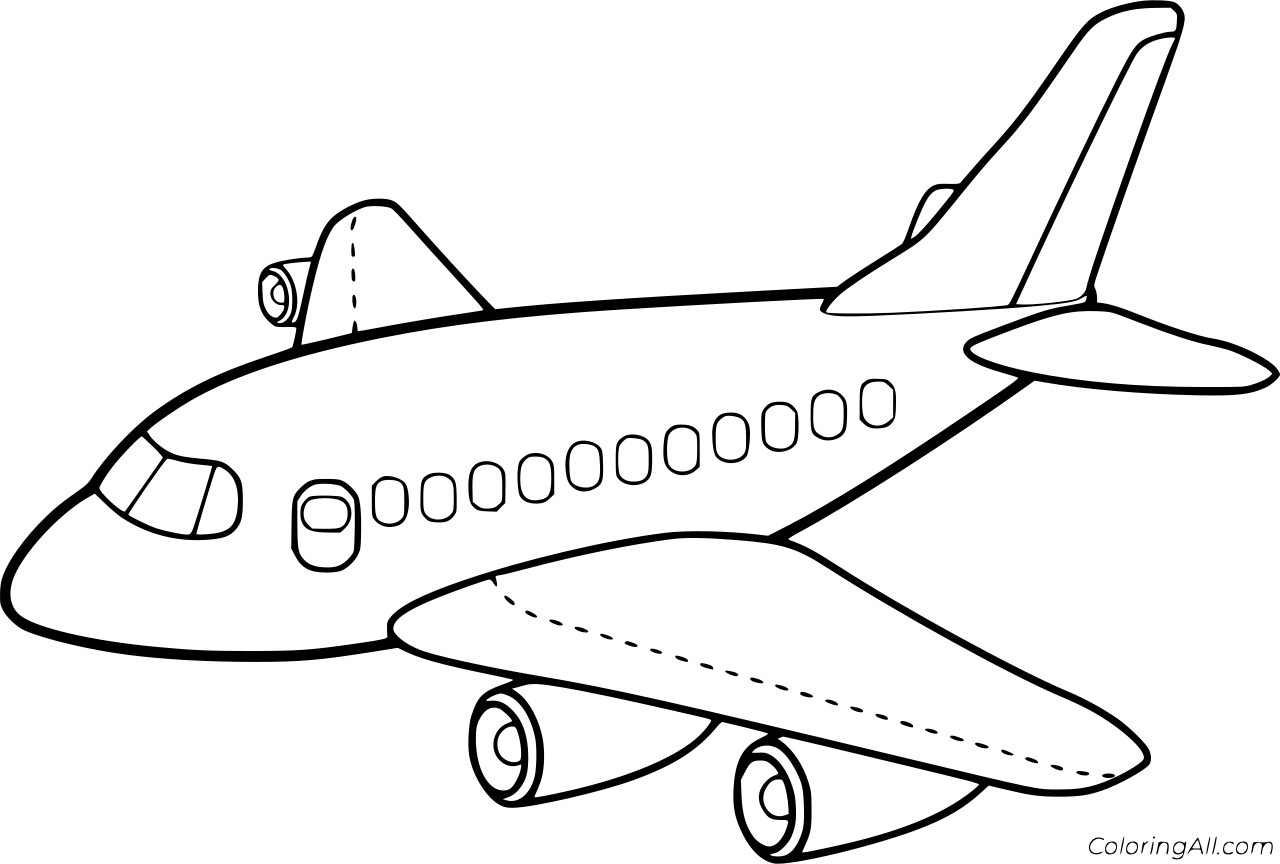
Commercial airliners are designed for passenger transportation, offering a range of seating configurations and amenities. Modern commercial airliners, like the Boeing 737 and the Airbus A320, are equipped with advanced avionics, comfortable seating, and state-of-the-art in-flight entertainment systems.
General Aviation Aircraft
General aviation aircraft are designed for private flying, transportation, and recreational use. These planes, like the Cessna 172 and the Piper PA-28, are popular among pilots and flyers, offering flexibility and freedom.
Military Aircraft
Military aircraft are designed for military operations, including transport, reconnaissance, and combat. Iconic planes like the F-16 Fighting Falcon and the B-52 Stratofortress are designed for speed, maneuverability, and firepower.
Rotorcraft
Rotorcraft, like helicopters and gyrocopters, use rotating blades to generate lift and propulsion. These versatile aircraft are used for a range of purposes, including medical transport, search and rescue, and recreational flying.
Unmanned Aerial Vehicles (UAVs)
UAVs, also known as drones, are remotely controlled or autonomous aircraft used for surveillance, photography, and other applications. With advancements in AI and sensor technology, UAVs are becoming increasingly sophisticated and versatile.
Design and Construction
Aerodynamics and Airfoil Shapes
Airplane design relies heavily on aerodynamics and airfoil shapes. The curved upper surface of an airfoil, like the wing, deflects air downward, creating lift. The shape and angle of attack determine the efficiency and stability of the aircraft.
Structural Components
Airplane structural components, like the fuselage, wings, and control surfaces, are designed to withstand the stresses of flight. Materials like aluminum, carbon fiber, and steel are used to construct modern aircraft.
Avionics and Electronics
Avionics and electronics play a critical role in modern airplane design. Systems like navigation, communication, and engine management are integrated into the aircraft's control systems.
Propulsion Systems
Propulsion systems, including engines and fuel systems, are essential for flight. Modern engines, like the Pratt & Whitney PW1000G, offer high efficiency and power.
Safety Features and Regulations
Airworthiness Certificates
Airworthiness certificates, like the Federal Aviation Administration (FAA) Certificate of Airworthiness, ensure that aircraft meet minimum safety standards.
Maintenance and Inspections
Regular maintenance and inspections are critical to ensuring the airworthiness of an aircraft. Compliance with regulations like the FAA's maintenance requirements helps to prevent accidents.
Emergency Procedures
Emergency procedures, like evacuation protocols and emergency landing procedures, are designed to respond to unexpected events. Airlines and operators must train personnel to respond effectively in emergency situations.
Safety Standards
Safety standards, like those established by the International Civil Aviation Organization (ICAO), provide guidelines for designing, testing, and certifying aircraft.
Impact on Society
Economic Impact
Airplanes have a significant economic impact on society, connecting businesses, cities, and people around the world. They facilitate trade, tourism, and travel, generating billions of dollars in revenue.
Environmental Impact
Airplanes have a significant environmental impact, with greenhouse gas emissions contributing to climate change. However, advancements in technology and efficiency have helped reduce emissions and improve fuel consumption.
Social Impact
Airplanes have a profound social impact, facilitating global communication,
Recent Post
Unlocking The Secrets Of Menopause: Expert Insights On Navigating Life After 40 With Paolo Tantoco
Tensions Rise As Trump Officials Defend Tariffs Amid Market Volatility And Warnings For Savers And Retirees
Rosie O'Donnell Teases Trump Move, Posts Disruptive Selfie From Abroad
Wings For The Win: Capitals Edge Ducks 7-4 In Thrilling Matchup
Ducks Fall Short: Key Takeaways From Thrilling 7-4 Loss To Capitals
Article Recommendations
- Unlock SEO Success: Dominate The Competitive Rankings
- Hollywood's Rising Star: Uncovering The Enigmatic Alex Landi
- Oksana Glamour: A Peek Into The World Of High-Fashion Glamour